
Adam Chau: AAPI Heritage Month Feature
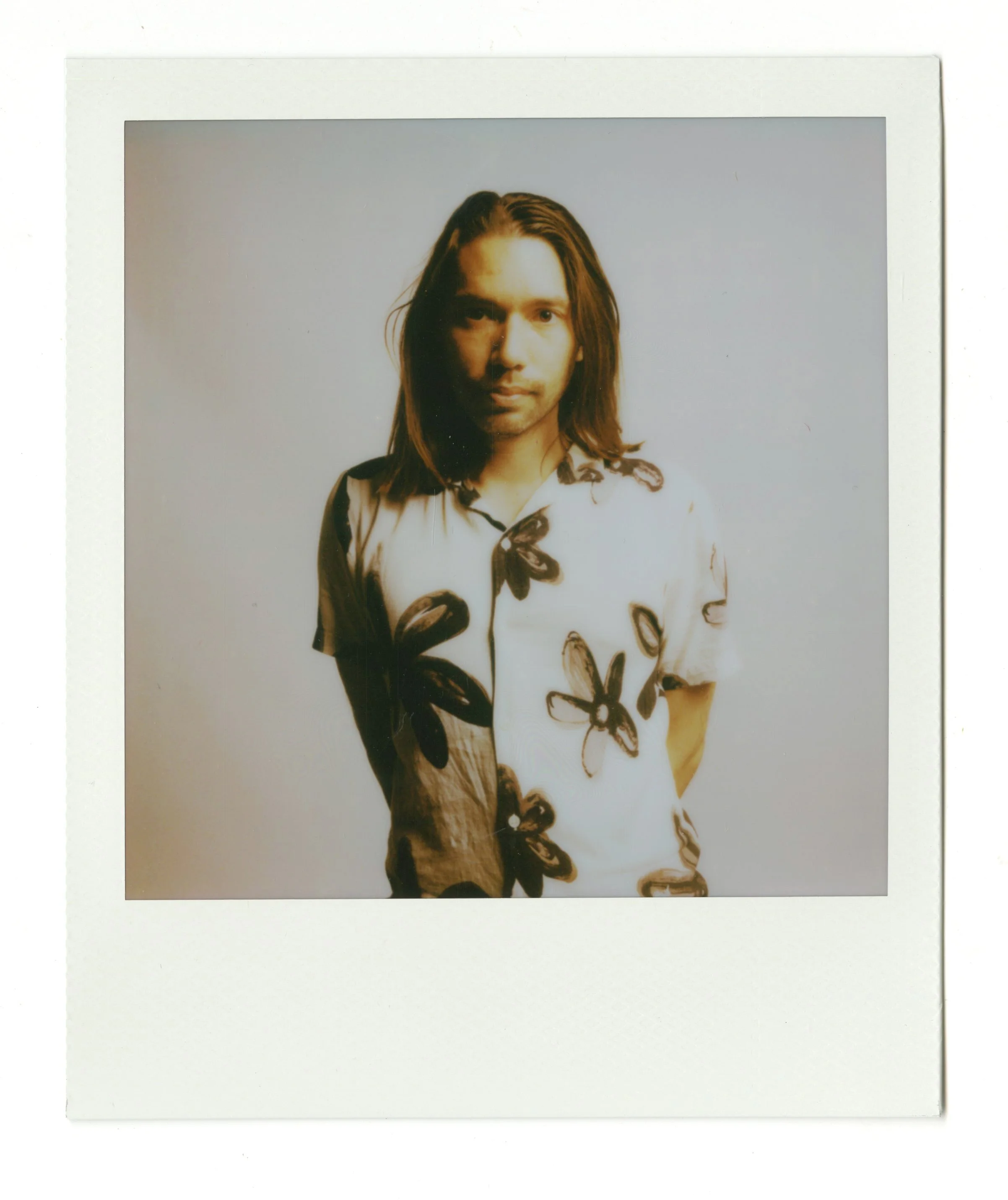
Portrait of Adam Chau, credit: John Reuter
This Asian American & Pacific Islander Heritage month, ceramic artist and curator Adam Chau sat down with Arts Committee member Leah Appleton to discuss art, technology, identity, intersectionality, and connection. In addition to his studio practice, Adam Chau serves on the board of National Council on Education for the Ceramic Arts (NCECA) as the Director of Exhibitions (2023-2029) and leads the adjudication of calls for art. He is currently the Edith Dale Monson Gallery Director and Curator at Hartford Art School.
Adam Chau’s work is featured in Radical Americana, a citywide initiative organized by The Clay Studio that unites 25 of Philadelphia’s arts and cultural institutions in a series of exhibitions responding to the Semiquincentennial. Chau’s new work centered on LGBTQIA+ history and future is featured in the Philadelphia Museum of Art, The Clay Studio, and Biello Martin Studio in Old City. Additionally, a piece of Adam’s original artwork will be up for auction at the Asylum Pride House fundraiser House Party at Asian Arts Initiative on 5/29 from 8-11pm.
Leah Appleton: It's so nice to see you, I’m looking forward to our conversation and sharing with our community to get to know you and your work. Let's start by having you introduce yourself and your journey as an artist.
Adam Chau: My name is Adam Chau. My pronouns are he and him. And I originally went to college for fine art ceramics, but I really wanted to talk about how objects were made in a global setting. So– I ended up going to grad school for industrial design. And I think the arc really starts there because I learned all about digital manufacturing and precision tooling.
I liked it, but something was off. I really felt like the human element was removed from industrial ways of making. I spent my thesis time in grad school looking at how we can hack the machine, and how we can start to introduce the human hand into digital environments. Since then, I've really tried to adopt digital technology and find ways that we can work within those environments– don't necessarily go completely against it, but work with it to make sure we're working with it in the most ethical way, that we're doing it in a very human way, one where the human is involved. From there, I've been working primarily in ceramics. I surface a lot of porcelain with blue and white; it's been probably 10 years of researching blue and white porcelain, where it has come from, its global trajectory from the Middle East to China all the way back via the Silk Road. It is a global material– both the blue, which is cobalt, and then porcelain. I'm also very interested in the parallel between cobalt and digital technology because [cobalt] is in lithium ion batteries. It gives us this gorgeous blue in clay, but it also powers our iPhone. And I think that it is super interesting to combine one of the world's oldest materials– the earth– with 21st century technology.
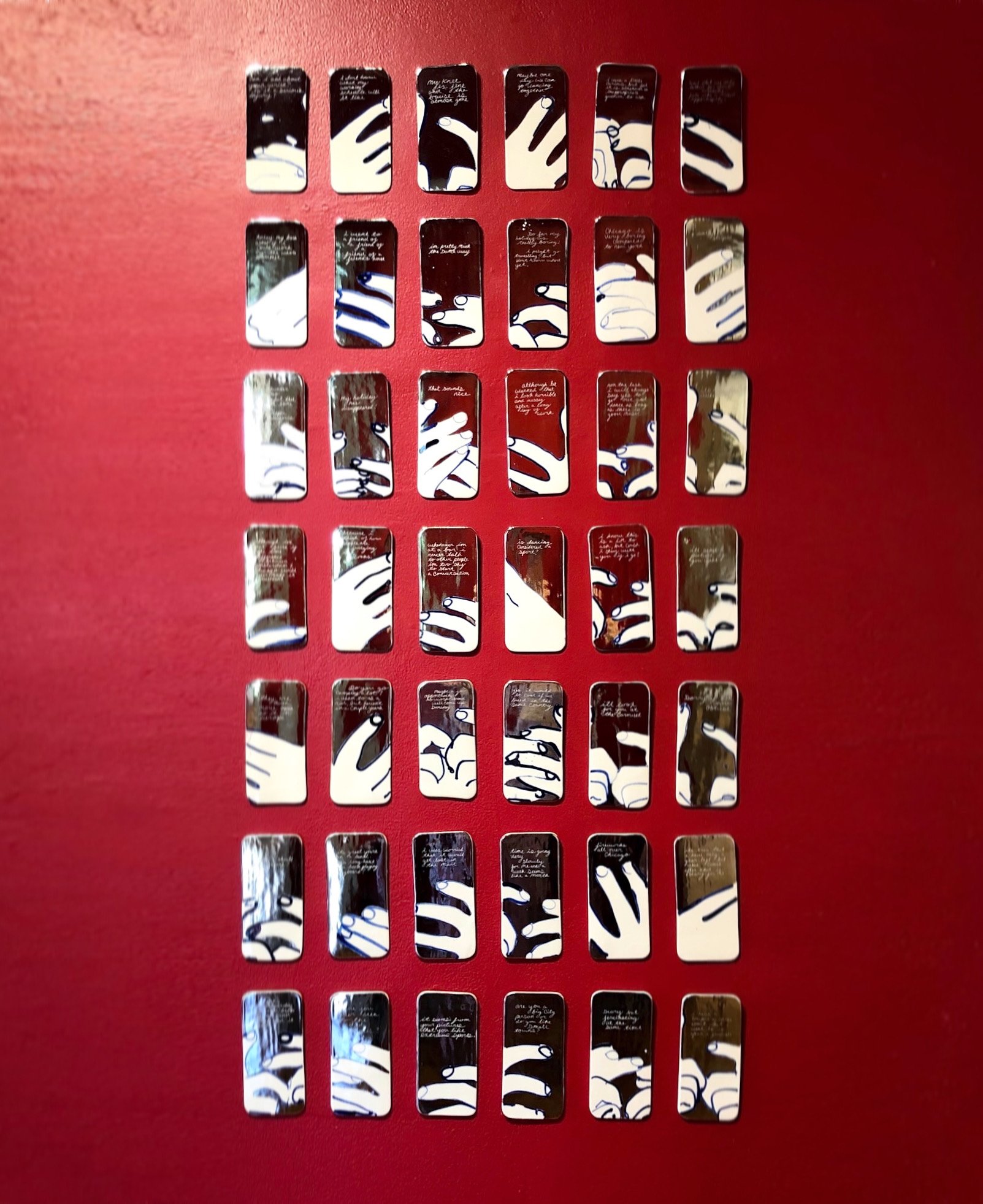
image: Adam Chau, Digital Calligraphy, 2021
Leah Appleton: I feel like that sort of dynamic exists in a lot of your work. Many of your pieces speak to intersections of dualities. You're talking about the oldness of the earth and the newness of certain technology in this case. You've also worked with intimacy and distance or tradition and the contemporary, the handmade and mass production as you said.
My experience of the work that you make creates a sense that these generally conflicting concepts are more connected to one another than they are oppositional to each other. Can you talk about that interplay and the role that intersectionality plays in your life and practice?
Adam Chau: I think actually there's two components. One is this intersectionality, or this duality, with process. Again talking about the machine and the hands coming together; I think my relationship with machinery and digital technology is collaborative. I think that I can create very interesting pieces along with technology, not the opposite way around. Not technology telling me what to do or creating an output that's only dictated by one side. I really want this partnership with these emerging innovative technologies and then on the other hand there's the intersection and duality of culture and identity.
I think just being a multi-racial person living in the 21st century– I'm both Caucasian and Asian– and I think living in kind of a third culture space growing up has really taught me to appreciate the multitude of cultures and how they kind of can coales and combine together into this wonderful new thing. I try not to say I'm half of anything, but I'm both this AND this. It's not an either/or statement. I think I approach that with my artwork as well.
Leah Appleton: As an inherent part of your identity, it pours over into your work very naturally. I think it creates a very welcome change in how one could traditionally conceive of these “oppositional” ideas. I think many people are uncomfortable with change or otherness, but presenting the symbiosis between two seemingly disparate points can be a powerful mechanism to help alleviate some maybe… fear or tension, and I think your work does that really well.
Adam Chau: Yeah, I think that I really want to present my work as kind of an intermediary between the old and the new because it's a cannon. It's a continuous evolution of technology, an evolution of culture. It's not that this new technology enters the market and then all of a sudden we're creating new objects. It's a continuum. We've been working with digital technology for many decades now. It's usually presented as new technology but there have been past iterations of what has been entering into the market previously and I just guess I want to be the kind of stepping stone in showing that we're actually bridging things, not just skipping over in order to create new
Leah Appleton: You're talking a lot about technology, your relationship with it and introducing technology into your practice, as you say, “collaborating with technology”. What types of technology specifically are you collaborating with now?
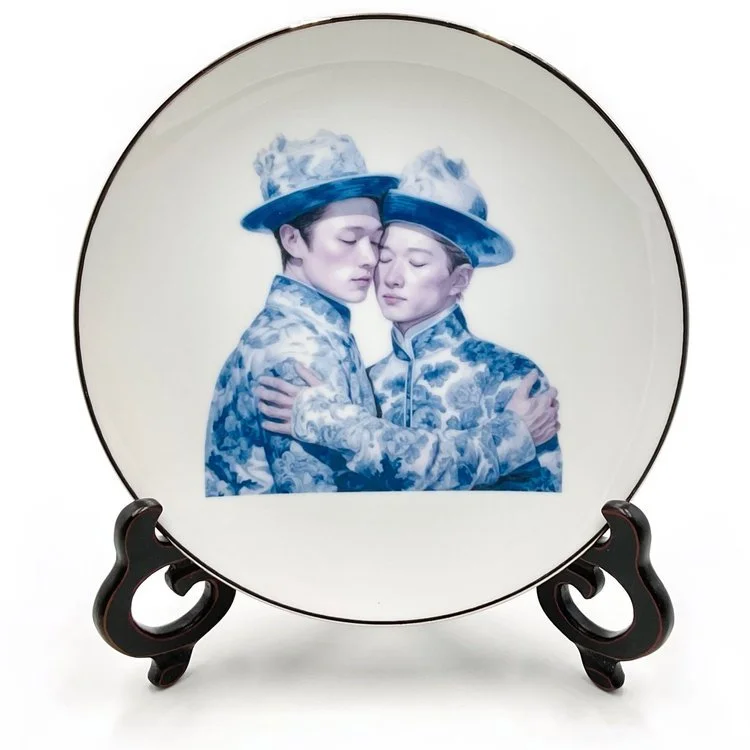
image: Adam Chau, Generated Love
Adam Chau: I use both digital manufacturing technology and I use digital software as well. I have a fab (fabrication) lab in my studio which is like a laser cutter, all to process clay in a digital manufacturing way. But then I also use software. Obviously, being an artist in the 21st century, I can use Photoshop, the Adobe Creative Suite, etc. But I'm also using AI and I have a couple of projects that have come out using that. One of them is to generate an older aesthetic kind of a Ming dynasty blue and white plate that has usually two male presenting people in intimate relations either embracing, kissing, holding hands and it's to be a little bit contextless. You don't necessarily know where it could be placed. Could you find these plates at a Goodwill or a china shop or your grandmother's cabinet? And it's supposed to ask the question, why hasn't homosexuality been celebrated through objects throughout history? And what if 200 years ago we would have been celebrating two men in a marriage? What would that dinner wear look like? And then most recently I've had AI combine childhood photos of myself and my husband in order to create a fictional biological child. I have an AI child that I generated a two-dimensional image but then I translated into 3D. I have molded life-size figures portraits of a little boy (Billie). I'll soon be having a show this year showing this porcelain doll head in different iterations of what would have been, what we imagine a child would be like.
And I would just say on top of that, the digital culture has really expanded my relationships. I would not be married without the internet. I was in a long-distance relationship for many years. My husband is Dutch and lived in Europe while I was living in Chicago. And we would not be together without this new piece of technology, this new piece of communication.
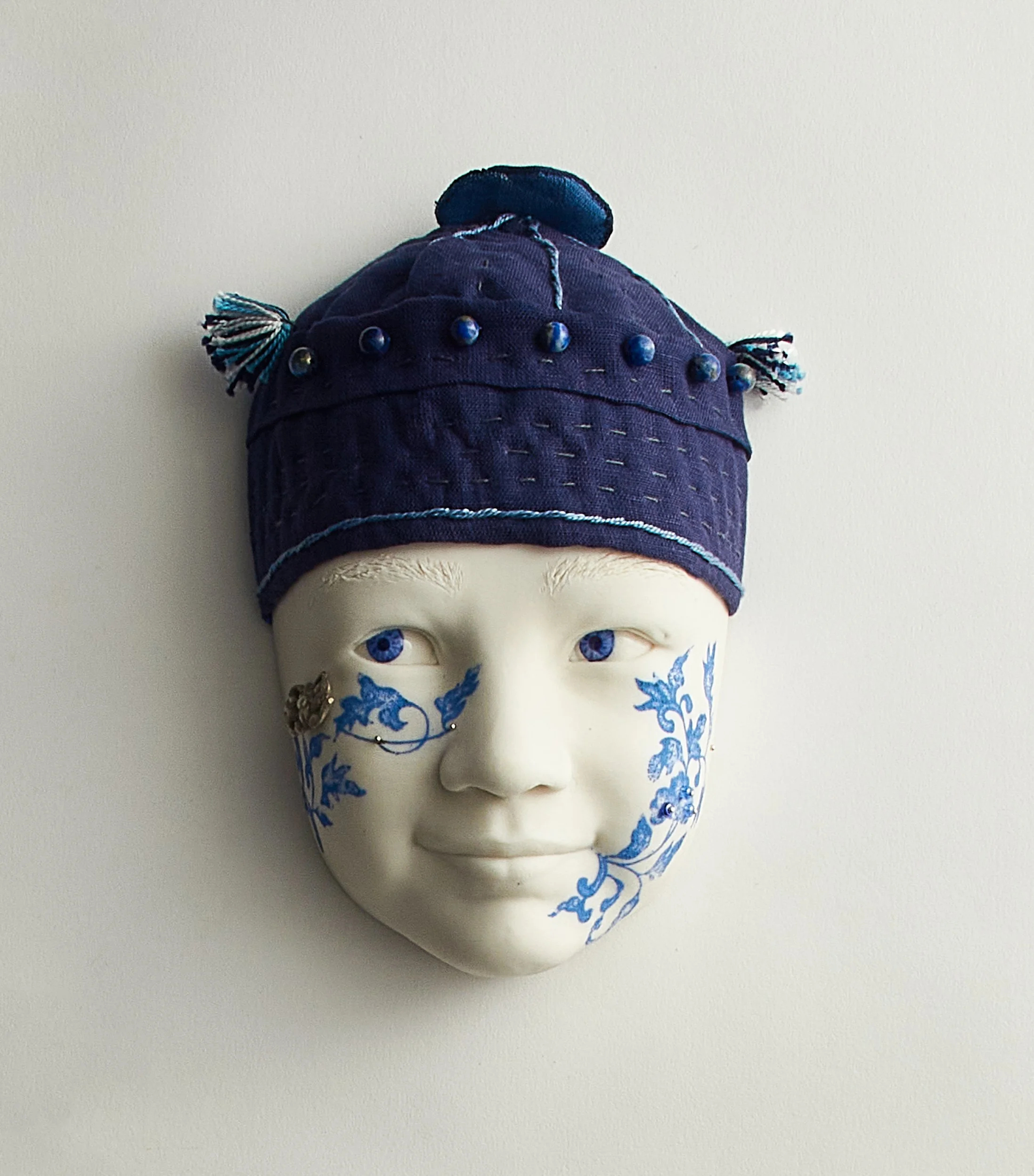
image: Adam Chau, Billie
Leah Appleton: A lot of your work in recent years has been sort of about that. It's been quasi autobiographical, focused around queer relationships, specifically sometimes you and your husband's relationships and your plural identities. I remember many years ago you made the porcelain and cobalt iPhones that were tracking the first text messages between you and your now husband. And now you're working on the Billie series, which is the porcelain sculptures of your fictional son. Can you talk to us about the role that your various cultural identities play in your artwork and why that's important to you?
Adam Chau: I believe that I should be telling my story. That's the only story that I can consensually tell and I think that the way I do it is in a universal way so even though they are direct experiences that I have had some of them a lot of them deal with my husband some of times I've dealt with ex-partners before but the way I present it is supposed to be universal and I really believe that anyone reading these messages or seeing this relationship unfold can empathize in at a certain capacity and I want that. I want a universality to it where it's not even though it's my story, someone else can put themselves in my shoes.
Leah Appleton: You're talking about how you can only consensually tell your own story. Part of your practice, in addition to your art practice, is your curatorial practice. Since you founded the project in 2018, you've been curating the annual exhibition, the Lunar Project, which explores the Asian diaspora through art and culture. Can you tell us about why you decided to organize this particular project and why you continue to produce the exhibition series?
Adam Chau: I think with my artwork, it comes from such a personal place of lived experience. I've been fortunate to be in the curatorial field and have a large network of artists that I engage with. I saw an opportunity to expand the dialogue within the Asian diaspora in a positive creative way. What I do is I ask 12 artists to choose one animal from the Asian zodiac and present it in a new piece of artwork. This has traveled across the US for the last couple of years. Sometimes it's a very literal exhibition where artists represent the animal that they choose in a very figurative way and sometimes they choose a very abstract way. Sometimes they choose to just take the characteristics of the animal to talk about their own lived experiences and how that animal can be kind of a guide to a larger discussion, and I really love the project. It's dear to my heart and it's also a way for me to stay connected with my community. It gives opportunity to people, but it also engages myself in conversations with people that have an experience similar to mine, but not exact to mine. And I really like that. We've also started a private book club, and have had a little bit of a mentorship program stem out of that as well. The exhibition most recently at Mainline Art Center in Haverford.
Leah Appleton: Yeah, that's great. I feel like artwork and collaborative process is one of the best ways to feel connected to aspects of yourself but to also locate those aspects of yourself in others and feel more connected in a universal way. I appreciate how you're doing that on several different levels both by pulling other people in, including teaching those thought practices and sharing practices to college students as well.
I know right now you have three different shows up in Philadelphia, all part of the Radical Americana partnership. One of them is a plate that will be in the Philadelphia Museum of Art.
The commission plate is a speculative dinner service for the first openly Queer president of the United States. Can you talk about what it was like to engage with this line of thinking in today's political climate, especially considering all the different identities we've talked about today?
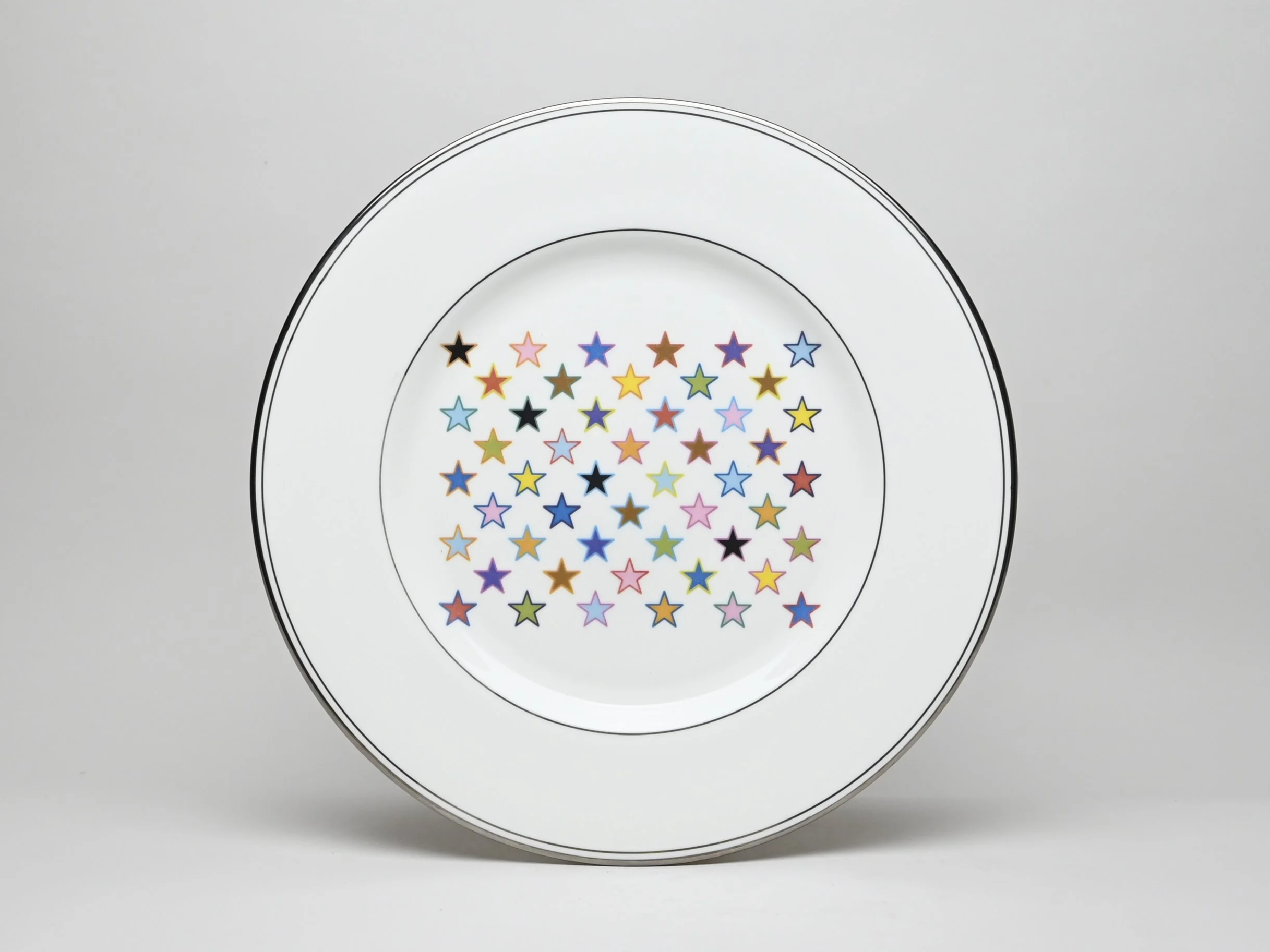
image: Adam Chau, Presidential China
Adam Chau: I was really excited to be working on this project. I wanted to work with Lenox who is the producer of many of the Presidential China series. Past presidents have been able to create their own dinnerware service as a form of diplomacy for the United States to guests. And I am very interested in how the domestic objects, obviously being a ceramic artist, how these objects proliferate into even our highest office. And because these plates all differ from president to president, showing their own ideals and how they want to run their administration.
I really thought of the future and what it would mean to the public for an openly Queer president to design a dinner service and what that would represent. How could you possibly present Queerness through such an open lens that would include a multitude of people?
The design I chose was a pattern of the stars on the American flag, and each star is coated with two colors. The inside colors are from our contemporary pride flag that we see around today. And the outside outline of the stars are a color from the original pride flag. I was really thinking of the old and the new. Obviously that's a line through all of my work. How do you merge the present with the past? Each star is different, there's no repeating color combination. I thought that was a wonderful way to talk about intersectionality and how there's no one way to be queer. There's no one way to represent this group. I'm very delighted that it's going to be paired next to the (President) Johnson Service because the Johnson Service was commissioned by Tiffany & Company and designed by the only openly gay designer in the whole presidential collection. I'm delighted that the curators were able to place it next to that work so it has a dialogue with the past in that queer perspective.
Leah Appleton: It's so exciting. I've seen the piece and we've talked a little bit about it, but not with this much detail. So, it's really expanding the work a lot for me to hear you share all of those details. What are the other works that you're including in Radical Americana and where can we see them?
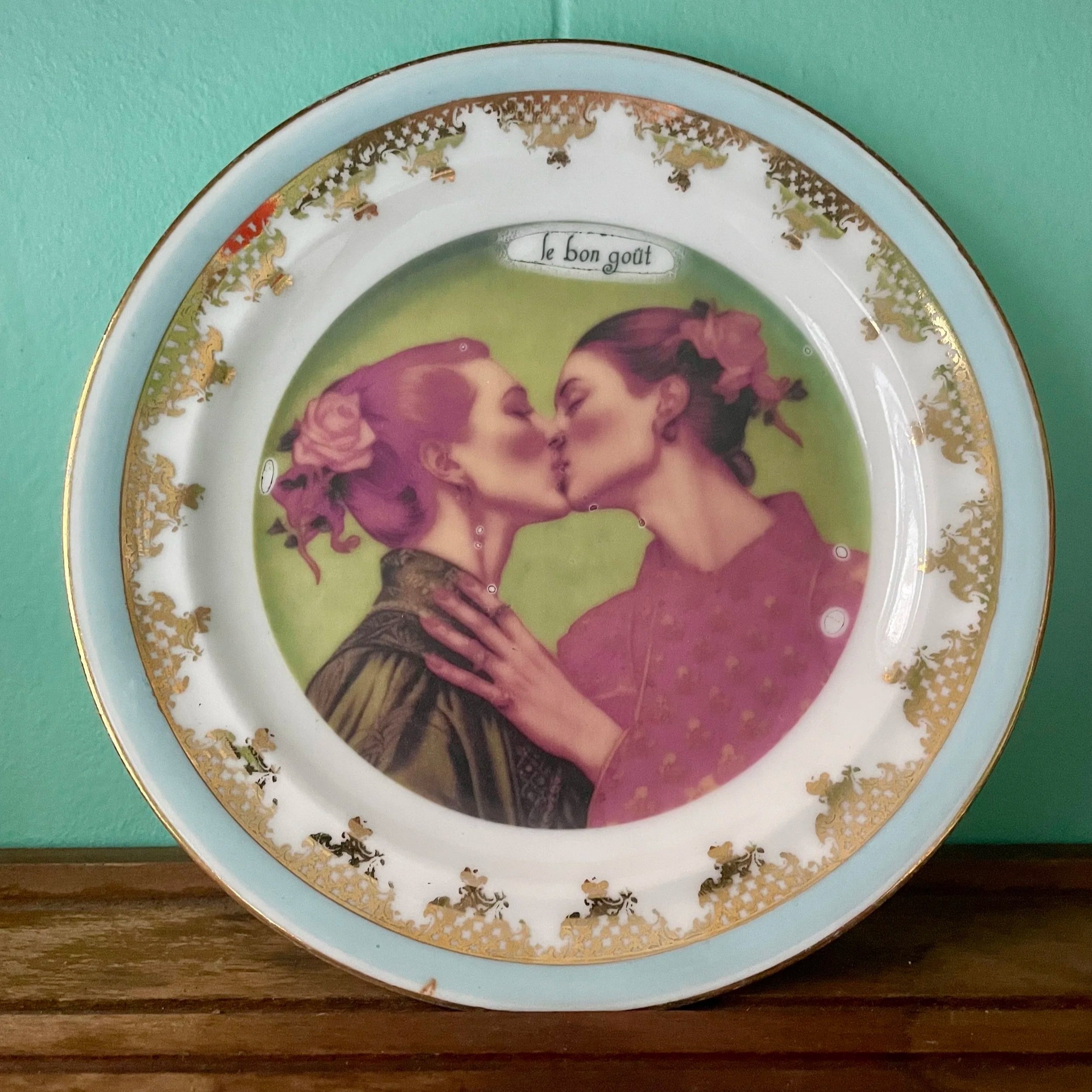
image: Adam Chau, Le Bon Gout
Adam Chau: I produced two more designs. One is a Lenox plate that is exhibited at the Clay Studio that's on view now until July 5th. It is a bow that is a spectrum of color representing the pride flag but in a very diffused manner. It's very watercolor oriented, not straight lines. And I wanted again something a little bit more nuanced and less clearcut as Pride colors. It's all a flowing spectrum of color going from pinks to reds to blues to greens to yellows very softly. It's a very wonderful gradient.
And then I will be at Bello Martin, which is a gay-owned studio and gallery in Old City. and I will be presenting a Lenox service that is a three tiered serve service that has a quote from Harvey Milk, a rebranded eagle with a rainbow ribbon as well as a larger ribbon that extends to serving plates.
Leah Appleton: That's great to hear. Are there any talks or special events that you'd like to plug around any of those that are happening later?
Adam Chau: There's going to be a meet and greet at the Biello Martin on May 30th from 1 to 4:00 p.m.. They are located at 148 North Third Street.
Leah Appleton: Adam, thank you so much for taking time to share all this with us today. Are there any final thoughts you'd like to share with our readers?
Adam Chau: I'm happy to have been interviewed by you and I'm always excited to see what William Way is doing. I hope to see everyone in Philadelphia!
See Adam Chau’s work in Radical Americana on view at the Philadelphia Museum of Art until April 24th and alongside Michael Biello’s work at Biello Martin Studio in Old City until June 27th.
To learn more about Adam and keep up to date with his projects, see his website adamchau.com, or Instagram, @adamcharleschau
Featured in the Issue 22: May 2026 edition of WayOut, your Philly Queer Arts Publication brought to you by the Arts Committee at the William Way LGBT Community Center.
Read our full newsletter here. To get our monthly email directly in your inbox, subscribe here.